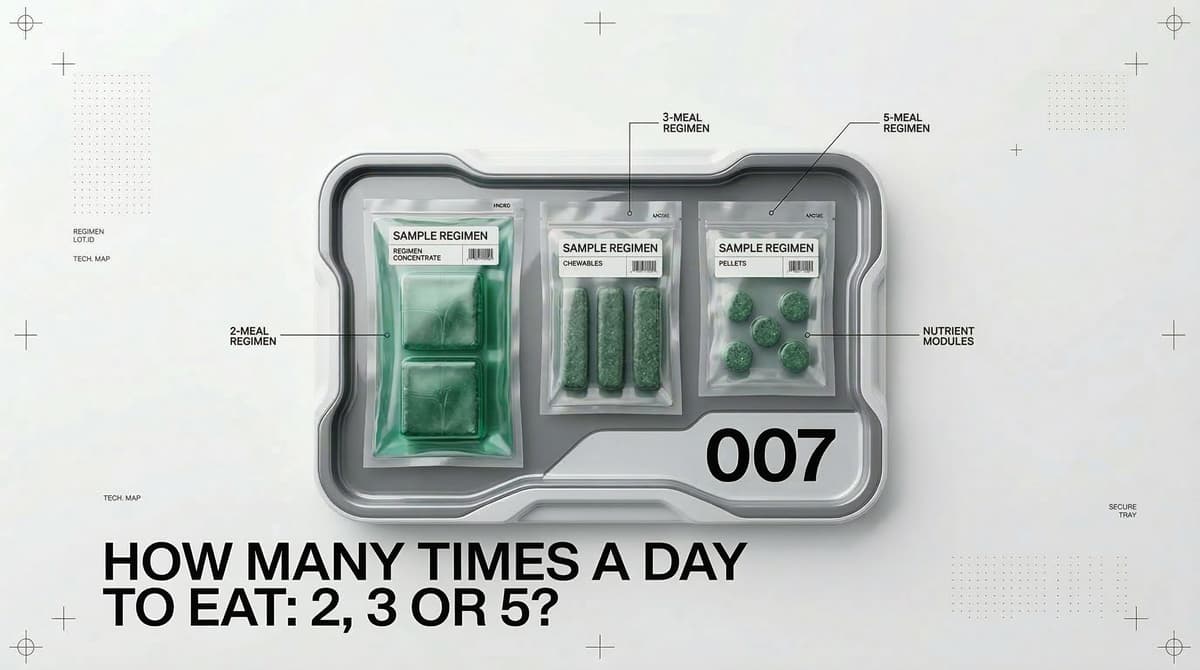
You've probably heard advice like “Eat 5 times a day to boost your metabolism” or the opposite “Eat 2 times and everything will fall into place.” The problem is, there's no universal “right” number of meals. There's a regimen that fits you specifically — based on your hunger levels, work, workouts, sleep, and even your cycle. The main criterion here is very down-to-earth: can you live like this for months, not just three days on motivation.
Below — no magic or myths: what science says about meal frequency, who 2, 3, or 5 meals suit best, and how to choose a regimen that actually sticks.
What matters more than frequency: reality without scare tactics
When comparing “2 vs 3 vs 5” regimens with the same calorie intake and macronutrient composition, most people see little to no difference in weight loss or body composition. Meaning, eating more frequently doesn't automatically give an edge.
Studies on meal frequency overall yield mixed results: sometimes fewer meals win, sometimes there's no difference, and evidence quality is often moderate or low (it's hard to perfectly control diet and habits).
What this means for you in practice:
Frequency is a tool for managing hunger and behavior, not a “metabolism button.”
Results are more influenced by: total calories, protein, fiber, food quality, sleep, and stress.
Meal frequency can help if your issue is evening binges, “empty fridge at 11:40 PM,” or “I forget to eat and then devour everything.”
2 meals a day: who it works for and the pitfalls
When it's really convenient:
You have a packed schedule and hate “snacks for the sake of snacking.”
You feel better when you think about food less.
It's easier to control evening appetite with 2 large meals.
Pros:
Simplicity and fewer decisions (“what to eat?”).
Often easier to hit a deficit, as there are fewer “incidental” calories.
Cons and risks:
Harder to get enough protein and fiber without feeling stuffed.
Can be tricky with workouts (especially strength training): some dislike training on an empty stomach, others on a full one.
If prone to bingeing “all at once,” 2 meals can trigger swings.
Hack for 2-meal regimen: Make each meal an “anchor of satiety” — protein + fiber + some fat (e.g., meat/fish/tofu + grains/legumes + veggies + oil/nuts).
3 meals a day: the most sustainable compromise
This is often the best starting point if you're unsure.
Why it works for many:
Easier to spread food evenly and not arrive at evening “running on empty.”
Simpler to hit protein/fiber goals without huge portions.
Fits workouts well: add a small snack before/after as needed.
If you want a regimen that minimally conflicts with real life, 3 meals are a great “default preset.”
5 meals (3 + 2 snacks): when it really fits
It's not mandatory or “better,” but sometimes 5 meals are genuinely more convenient.
Who it often suits:
You move a lot or train hard, and smaller, more frequent meals work better.
You struggle with large portions (e.g., due to stomach comfort).
You're aiming for muscle gain or steady protein intake.
Sports nutrition data suggests spreading protein across meals (e.g., 20–40g every 3–4 hours) can support muscle protein synthesis — especially with strength training.
Pitfall of 5-meal regimen: “Snacks” easily become extra calories that sneakily derail plans. Plan snacks meaningfully (e.g., “protein + fruit” or “yogurt + berries”), not on impulse.
Key detail: fiber and cholesterol often drive satiety more than frequency
If you pick a regimen just by “how many times,” you might miss the main hunger culprit: your diet isn't satiating enough.
Fiber recommendations for adults are roughly 25–38g/day (varies by sex/age), and many fall short.
Soluble fiber (oats, legumes, apples, etc.) can lower LDL cholesterol; reviews note effects from increased intake, with 5–10g/day and up showing noticeable impact.
In practice: sometimes you don't need a “fourth meal” — you need a proper lunch with veggies and protein, not a bun with coffee.
How to choose a regimen you'll actually stick to: mini-algorithm
Pick based on your day, not ideals.
1) Start with your schedule
No time during the day → 2–3 often wins.
Stable breaks → 3.
Lots of activity/workouts/meetings → 3 + snack can be handy.
2) Factor in workouts
Strength/intense: many prefer 3–5 for easier protein and avoiding “empty” training.
Light activity: 2–3 can feel fine.
3) Check hunger and “evening tail”
If you often “hold out during the day, devour at night” — try:
An early substantial meal, or
A planned snack before hunger hits hard.
4) Respect your cycle and state
Some cycle phases amp up appetite, make sleep touchier, stress higher. It's not “weakness,” it's reality. In those weeks, shifting from 2 to 3 (or adding a snack) beats heroically sticking and crashing.
14-day experiment: is it your regimen?
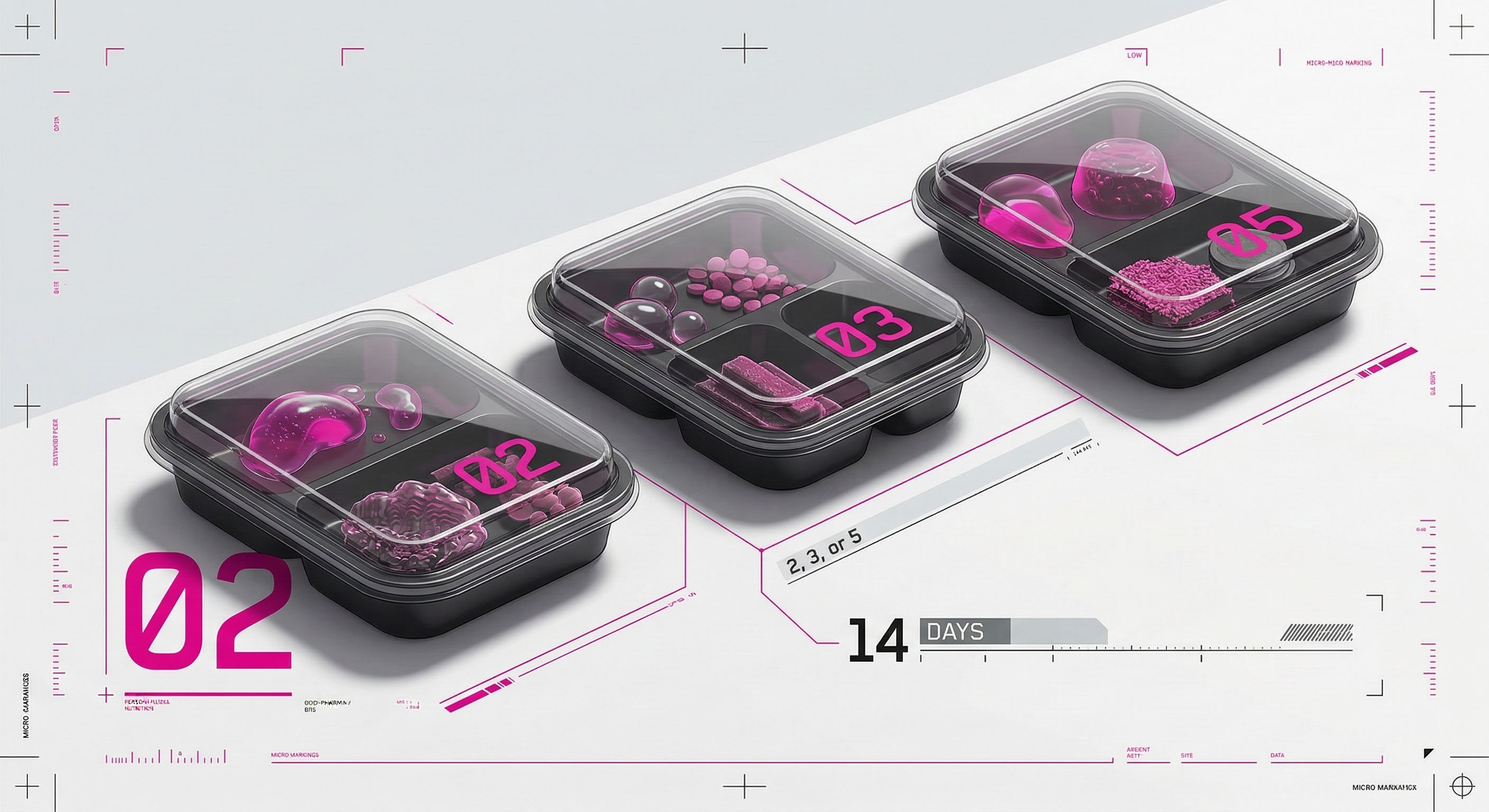
Pick one (2/3/5) and live it for two weeks without perfectionism.
Track (briefly but regularly):
Hunger before meals (0–10 scale);
Satiety after;
Energy through the day;
Sleep;
Workouts (quality/recovery);
Mood/stress;
If relevant — cycle and well-being.
Here's where a tracker shines: track not just macros, but fiber and cholesterol, log workouts, body metrics, state, and food by name or AI photo. Spot patterns fast: “When I hit fiber, no evening sweets craving,” “Low protein = constant hunger,” “Late dinner = worse sleep.”
Ready “day templates” to avoid reinventing the wheel
2 meals a day
Meal 1: protein + grains/legumes + big veggie portion + some fat
Meal 2: protein + veggies + complex carbs source (per goal) + fruit/berries
3 meals a day
Breakfast: protein + fiber (e.g., cottage cheese/yogurt + berries + oats/whole grain bread)
Lunch: “plate” (protein + veggies + carbs)
Dinner: protein + veggies + carbs if needed (esp. post-workout)
5 meals a day (3+2)
3 mains as above
Snack 1: protein (yogurt/cheese/tofu) + fruit
Snack 2: veggies/whole grain + protein (or nuts in moderation)
When to talk to a doctor/dietitian
If you have diabetes, GI issues, pregnancy/breastfeeding, eating disorder history, or meds affecting appetite/metabolism — tailor your regimen personally. (Not a scare, just safer.)
Bottom line: the “best regimen” simplifies your life
2, 3, or 5 isn't about willpower or “rightness.” It's tuning to your reality: schedule, workouts, sleep, cycle, stress, hunger.
If unsure, start with 3 meals, then adjust by data, not myths.