Sometimes the question "can I eat before bed?" sounds like a little test of "correctness." But here's the good news: in real life, it's not that strict. What matters more is what, how much, and how close to bedtime you eat—not the fact of a late dinner itself.
Myth #1: "If you eat after 6 PM, you'll definitely gain weight"
Weight gain depends primarily on energy balance: how much energy you got from food and how much you spent over the day or week. The timing of meals doesn't magically turn food into "fat."
But there's a catch: late dinners often come with:
choosing more calorie-dense foods (because fatigue + cravings for "treats"),
eating faster and feeling less satisfied,
adding "snacks while watching TV" that are easy to overlook.
So the problem is usually not the time itself, but the habits around it.
What science says about late meals
Research on "chrono-nutrition" (how eating relates to body rhythms) generally points to these ideas:
Very late and large dinners can worsen blood sugar control in some people (especially those with prediabetes or insulin resistance), because insulin sensitivity drops for many people toward evening.
Heavy food right before bed can disrupt sleep: not for everyone, but the risk is higher if the food is fatty, spicy, very large, or if you're prone to heartburn.
At the same time, a small snack before bed actually helps some people: it reduces intense hunger, decreases nighttime awakenings, and lowers the risk of chaotic eating the next day.
Bottom line: "late" isn't a verdict. What matters is finding what works for your body.
Why you sometimes feel very hungry before bed (and it's normal)
Evening hunger isn't always "weak willpower." Common reasons:
Undereating during the day. If you had too little protein or fiber, or long gaps between meals—your body catches up in the evening.
Stress and poor sleep. When you're tired, your brain more readily asks for quick energy sources and "comfort food."
Exercise. After an active day, your body genuinely may need recovery—and evening hunger makes sense.
Menstrual cycle. In the second half of your cycle (luteal phase), many people experience increased appetite and carb cravings. This isn't "being picky"—it's your hormones and thermoregulation at work.
When eating before bed is okay
You can likely eat in the evening (even before bed) if:
you're genuinely hungry, not just bored,
the snack is small and light,
you feel comfortable after eating—no heartburn or heaviness,
your sleep doesn't suffer.
Good "night snack" options (roughly 150–250 calories):
yogurt or kefir + berries;
cottage cheese or soft cheese like cottage;
banana + a few nuts;
small bowl of oatmeal with water or milk;
egg + slice of whole grain bread;
tofu or hummus + vegetables;
small bowl of vegetable soup.
The idea is simple: a bit of protein + some fiber or complex carbs. This provides satiety and usually doesn't interfere with sleep.
When it's better to avoid eating right before bed
There are situations where being careful matters more:
Heartburn or GERD: late meals, especially fatty or spicy ones, can worsen symptoms. The "eat 2–3 hours before bed" rule often helps.
Sleep problems: if you notice your sleep worsens after a late dinner, try something lighter or eat earlier.
High-calorie drinks: sweet beverages, "latte with syrup," alcohol—easy to consume without noticing and get lots of calories without feeling full.
Huge portions: even healthy food in enormous amounts can make it hard to fall asleep just from discomfort.
A simple rule that works for most people
If you want a universal "framework," try this:
Substantial dinner—2–4 hours before bed.
If hunger hits later—light snack 30–90 minutes before bed.
And two more tips:
Make dinner "complete": protein + vegetables/fiber + some carbs or fat. This reduces the chance you'll hunt for food at night.
If you crave sweets in the evening—sometimes the answer isn't "no," but a plan: choose a portion-controlled dessert ahead of time and fit it into your day.
How to figure out what works for you (without guessing)
The most honest way is a mini-experiment over 7–10 days:
Note the time of your last meal.
Write down what it was (roughly).
In the morning, rate your sleep on a 1–10 scale and your hunger level.
Look for patterns, not single days.
If you track both food and how you feel—that's ideal: you start seeing which dinners give you an energized morning and which leave you feeling heavy and drained.
Try tracking your dinners, sleep, and how you feel for a week—and AI can help you quickly calculate macros, fiber, and even cholesterol from a photo of your meal, so you see patterns without doing the math yourself.
A small bonus: "what if I eat late because that's how I live"
If your schedule means dinner is inevitably late (work, school, kids), you don't have to fight it—adjust the system:
Eat proper meals during the day so you don't arrive at night "running on empty."
Keep light dinner options at home: ready-cut vegetables, yogurt or kefir, eggs, fish or tofu, soup.
Try to make your late dinner smaller, with the main volume earlier in the day.
Don't blame yourself: stress and guilt almost always worsen both sleep and appetite.
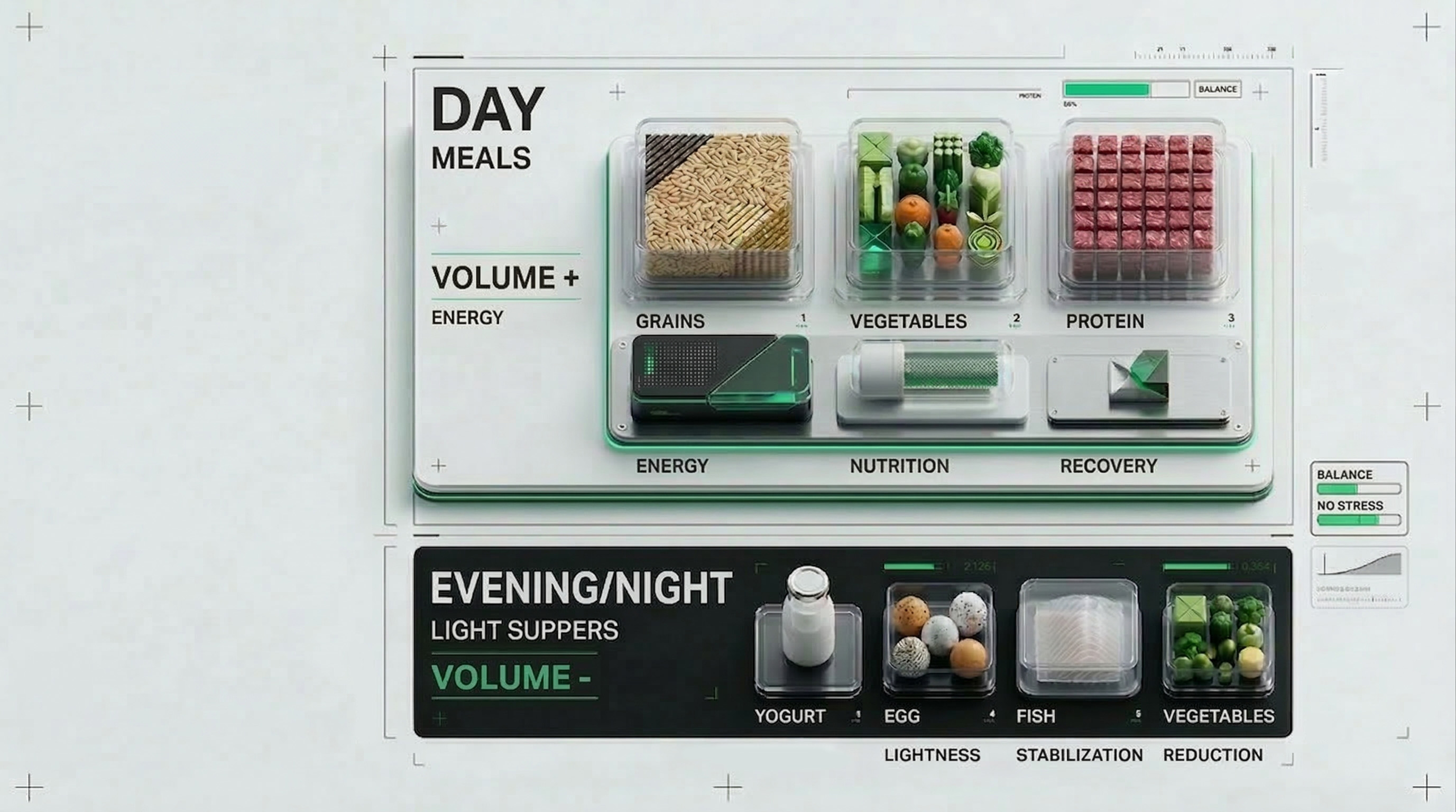
In short: you can eat before bed—especially if it's a small, sensible snack and it doesn't hurt your sleep. And if your goal is health and fitness, the real wins come not from time-based rules, but from consistency, food quality, and what feels good for your body.