Fiber: The Hidden Hero of Your Diet (and How to Stop Counting It by Hand)
Fiber is an essential part of a healthy diet: it supports digestion, helps regulate blood sugar, and protects your blood vessels from cholesterol. Knowing your daily target matters — but let’s be honest: manually calculating grams of fiber, calories, macros, and cholesterol for every plate is exhausting.
That’s exactly why our website has a smart AI assistant that takes care of all the math, making healthy eating simple and accessible. But first, let’s break down why fiber matters so much.

What Fiber Is and How It Works
Fiber (dietary fiber) is a type of complex carbohydrate found in plant foods. Unlike many other nutrients, it isn’t digested in the stomach and reaches the large intestine largely unchanged.
There are two main types:
Soluble fiber: Turns into a gel when mixed with water. It slows down carbohydrate absorption (helping prevent blood sugar spikes) and binds “bad” cholesterol so it can be removed from the body.
Insoluble fiber: Adds bulk to food, stimulates intestinal movement, and works like a “brush” for your gut.
According to Harvard research, regular fiber intake reduces the risk of heart disease, type 2 diabetes, and colorectal cancer by 16–24%. It also helps you feel full for longer—critical for weight management.
Three Reasons to Track Fiber Every Day
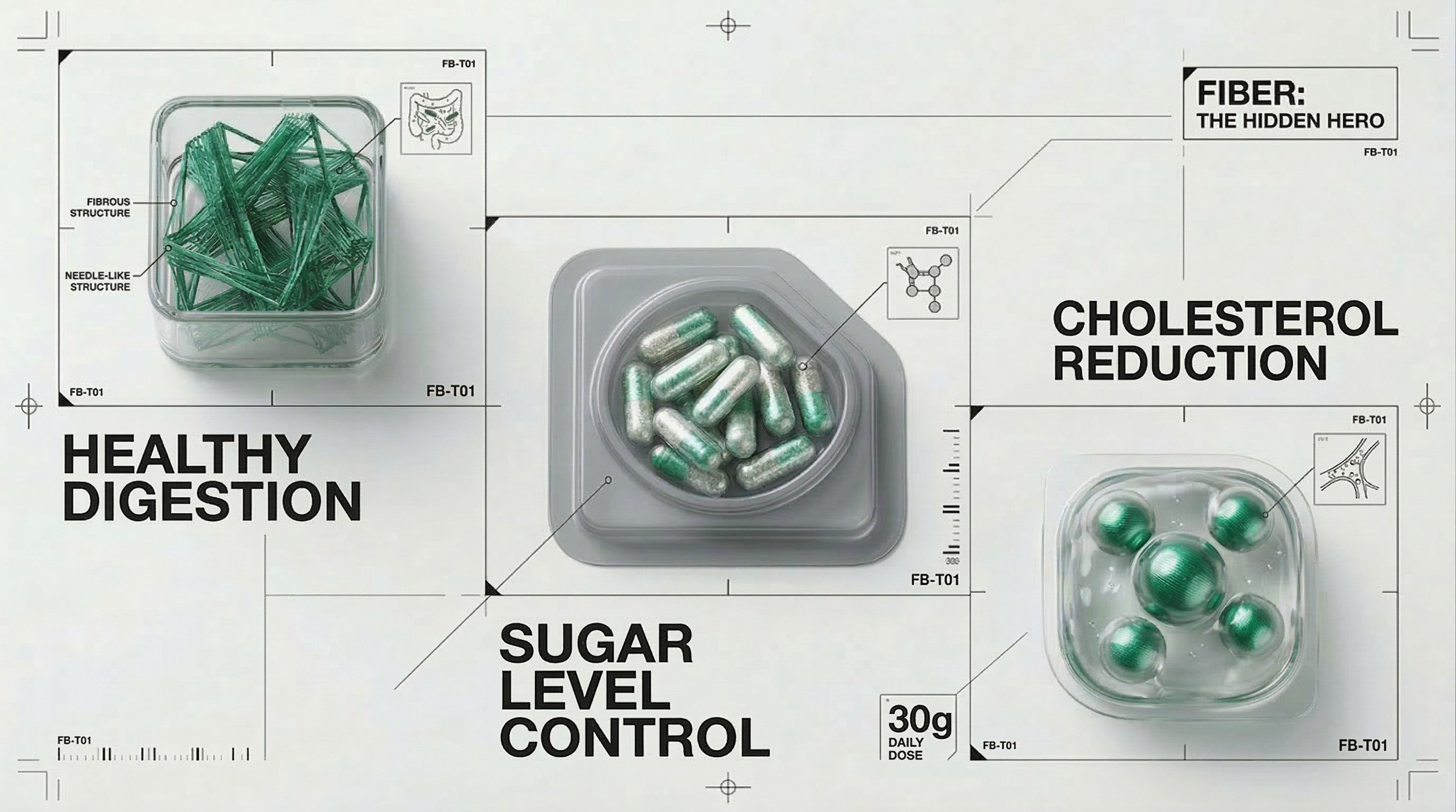
Healthy digestion. Fiber feeds beneficial gut bacteria, helping them produce substances that reduce inflammation. Regular intake relieves heaviness and helps prevent common digestive issues.
Blood sugar control. By slowing glucose absorption, soluble fiber helps prevent sharp energy crashes and intense hunger after meals. It’s a powerful tool for preventing insulin resistance.
Lower cholesterol. Eating 30 g of fiber per day can reduce “bad” cholesterol by 5–10%, helping protect your blood vessels from atherosclerosis.
How Our AI Assistant Does It All for You
A general recommendation for fiber intake is 25–30 g per day for women and 30–38 g for men. But how do you know how much you’ve already had?
Instead of googling calorie tables and weighing every gram, use the AI assistant on our website.
How it works:
Just type what you ate. (For example: “I had a bowl of oatmeal with an apple and a handful of almonds.”)
The AI calculates everything. The assistant automatically estimates portion size, calculates calories and macros, the exact amount of fiber, and even cholesterol levels.
Personalization. The AI considers your age, sex, weight, activity level, and goals (weight loss or maintenance) to create the ideal balance for you.
Practical Tips: How to Increase Fiber in Your Diet
If you want to boost your intake, do it the right way:
Increase gradually: Add about 5 g per day to avoid bloating.
Drink more water: Fiber only works properly when paired with enough fluids.
Choose whole foods: Swap juice for whole fruits (apples, pears with the skin), and replace white rice with brown rice (+3 g fiber per serving).
Add legumes: Lentils and beans are absolute champions (up to 15 g of fiber per 100 g).
Conclusion
Fiber is the foundation of a healthy body. Build better habits step by step—and leave the routine calculations to our AI assistant. Sign up on the website today and see how balanced your diet is right now!