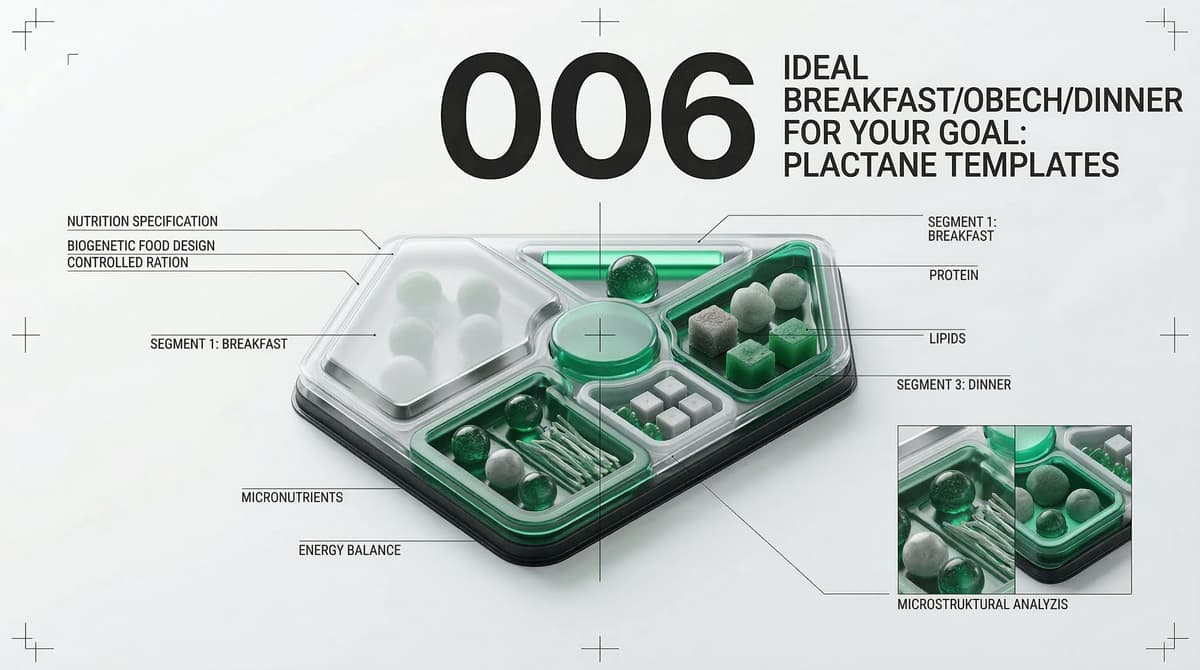
The "goal-based" plate is not magic or a strict diet, but a simple constructor: protein + fiber + appropriate portion of carbs + a bit of fats. When these elements are in place, it's easier to maintain satiety, energy, and progress—whether you're losing weight, maintaining, or gaining.
Base: what should be in every meal
1) Fiber — the anchor of satiety and blood sugar control
Fiber helps you stay full longer, supports digestion, and is linked to lower risks of several chronic diseases. Guideline for adults — about 25 g/day for women and 38 g/day for men, or 14 g per 1000 kcal.
Practical tip: aim for roughly 8–12 g of fiber per main meal — and get the rest from snacks (fruits, berries, nuts, whole grain bread, vegetables).
2) Protein — to control appetite and muscles
Minimum base for adults — about 0.8 g protein per kg body weight per day. If you train regularly, higher ranges work for many: ISSN position often mentions about 1.4–2.0 g/kg/day for actively training people.
3) Carbs and fats — the "handles" of calorie density
Carbs provide energy (especially for workouts). Best from whole grains/bread, legumes, potatoes "in skin," fruits.
Fats aid satiety and vitamin absorption — just very calorie-dense, so easy to portion.
4) Sugar — not forbidden, but limits are helpful
WHO (World Health Organization) recommends reducing free sugars to <10% of energy, even better — to <5%.
5) On cholesterol: diet context matters
Modern guidelines often shift focus from "exact dietary cholesterol limit" to overall eating pattern: less saturated/trans fats, more whole foods, vegetables, legumes, whole grains. The American Heart Association notes that a specific numerical limit on dietary cholesterol isn't strongly data-backed, and overall "less is better" in a healthy diet. Adding soluble fiber and plant foods can also help lower LDL cholesterol.
Visual plate template (quickest start)
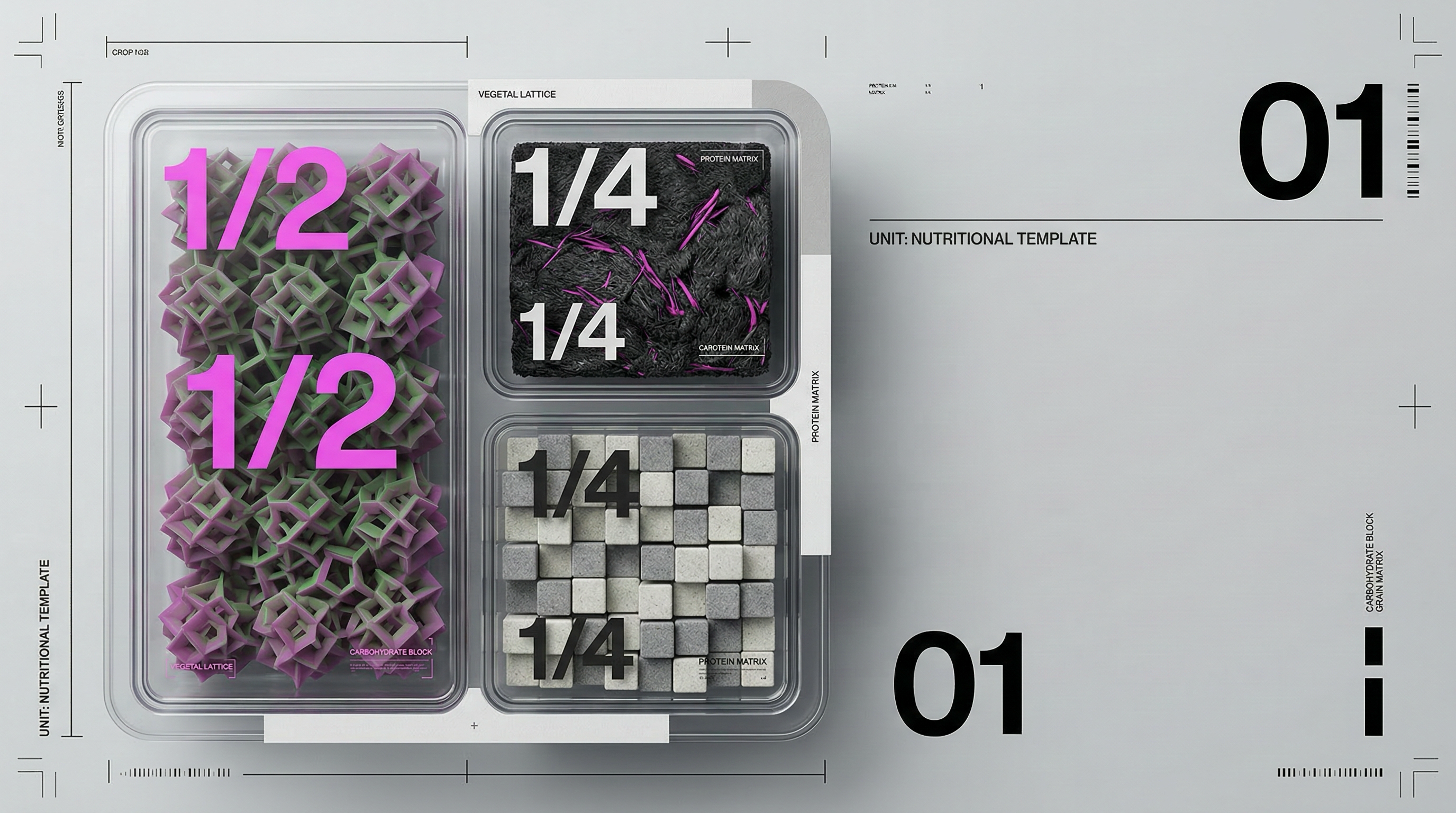
The "plate method" simplifies things:
½ plate — vegetables and fruits
¼ — protein
¼ — whole grains/starchy foods
Then — adjust for your goal.
Goal 1: weight loss — "volume + protein," lower calorie density
Idea: more vegetables/legumes/whole foods, protein in every meal, fats — measured.
Breakfast (constructor)
Protein: Greek yogurt/cottage cheese/tofu/eggs
Fiber: berries + 1–2 tbsp seeds (chia/flax) or oatmeal
Volume: fruit or vegetables (yes, veggies for breakfast — fine) Example: yogurt + berries + chia + a few nuts.
Lunch
½ plate — salad/vegetables (raw + cooked)
¼ — chicken/fish/tofu/legumes
¼ — buckwheat/brown rice/bulgur/potatoes Sauce — yogurt/lemon/mustard-based; oil — a little.
Dinner
Similar to lunch, but carbs can be smaller if low activity in evening: keep ½ veggies, ¼ protein, ¼ — either small grain portion or more filling legumes/veggies.
Goal 2: maintenance — "stability and flexibility"
Idea: stick to base plate, play with portions and flavors for sustainability.
Breakfast
Protein + fiber + carbs: omelet + whole grain toast + veggies/fruits. If sweet: oatmeal + milk/yogurt + berries + nuts (keep sugar in check).
Lunch
Classic plate ½–¼–¼. If training/lots of steps at lunch — increase carbs (e.g., more grains).
Dinner
Keep protein and veggies, adjust carbs to sleep and activity level.
Goal 3: gain — "add fuel, but keep quality"
Idea: same healthy blocks, but more carbs and/or fats (to hit calories).
Breakfast
Protein: eggs/cottage cheese/yogurt/tofu
Carbs: oatmeal/granola low sugar/whole grain bread
Fats: nuts/peanut butter (measured) Example: oatmeal on milk + banana + nuts + yogurt.
Lunch
½ veggies/fruits (still key)
¼ protein
¼–⅓ carbs (more than maintenance) Plus 1–2 "calorie boosters": cheese, avocado, olive oil, nuts.
Dinner
To gain without heaviness: carbs + protein (rice/hard wheat pasta + fish/meat/tofu) and veggies; fats — moderate to avoid gut overload.
Mini-bonus: if you have a cycle and "fluctuating appetite"
Studies show some women have higher energy intake in luteal phase, but individual differences vary. In practice: don't force it, plan ahead: more filling meals (protein + fiber), smart sweets (yogurt + berries, fruit + nuts), good sleep.
How to turn this into daily routine (no math in head)
Pick your goal (weight loss/maintenance/gain).
Build plate per template.
Check fiber and protein — they drive satiety.
Then — just track: macros, fiber, cholesterol (if needed), workouts, water, mood.
10-second plate check
Is there a protein source?
Are there veggies/fruits (at least ½ plate)?
Is there fiber (veggies/legumes/whole grains/berries/seeds)?
Do carbs and fats fit your goal (less for loss, more for gain)?
Does sweet fit limits (not every meal, no "hidden" sugars)?